.gif)
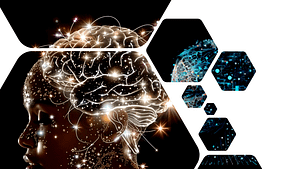
Let’s be real — your brain is tired. Not just tired like “I need a nap” — but tired in the existential, too-much-input, system-overload kind of way.
You’re not imagining it. And it’s not weakness. It’s biology.
🧠 Our Brains Weren’t Built for This
Cognitive neuroscience tells us that the human brain evolved for stability, patterns, and predictability. But we live in a world of constant disruption:
- AI that learns faster than we do
- An economy in flux
- Climate collapse
- Social upheaval
- Personal burnout
- Oh, and 87 Slack pings before 10 AM
We’re navigating a reality that is chronically unpredictable, and that creates a cognitive environment where our brains default to survival mode.
Fight, flight, freeze. Repeat. (Scroll, doom, repeat.)
And while you’re trying to run a business, show up for your family, be a good leader, and maybe also drink water… your brain is working overtime to make sense of too much.
💡 Neuroplasticity to the Rescue
But here’s the thing. We can’t control the world — but we can retrain our brains to respond differently.
This is where neuroplasticity steps in: The ability of your brain to rewire itself through repeated experiences, thought patterns, and yes — even interactions with technology.
And that’s why I’m exploring a new thread: What happens when we blend cognitive neuroscience, positive psychology, and artificial intelligence? Can we build smarter resilience — the kind that’s data-informed and emotionally intelligent?

🤖 AI Is Not the Enemy — Unless You Let It Be
Let’s talk about the tech.
Yes, AI is part of the problem. It’s also part of the solution.
The same tech that’s overloading us with content can also help us offload mental clutter and rebuild attention, focus, and calm.
Here are a few ways people are using AI to lighten their brains’ load:
- Wysa, Woebot Health, Replika — AI-powered mental health tools trained in #CBT, designed to talk you through anxiety or just help you reflect
- Motion, Sunsama, Notion AI — Productivity copilots that prioritize your day so you don’t have to juggle 13 to-do lists
- OpenAI – ChatGPT or Claude AI — Brainstorming, organizing your thoughts, writing drafts, prepping for conversations — like a thinking partner that never sleeps
Used right, #AI can be a resilience ally. Used passively? It becomes another voice in the noise.
🔄 Shift from Input Mode to Integration Mode
Your nervous system wasn’t made to absorb a firehose of content and keep functioning optimally. So start asking this:
“Is this AI tool helping me make space — or take up space?”
Rewire your tech stack to serve your mental health, not sabotage it. And remember: resilience isn’t about gritting your teeth through the chaos. It’s about learning to regulate, reframe, and redesign how you respond.
🛠️ Your Brain-Boost Starter Pack
Not ready to do a full overhaul? Cool. Here’s your starter kit:
- Choose one AI tool to reduce your load. Automate something small.
- Set a “no scroll” hour. Give your amygdala a break.
- Practice micro-reflection. 60 seconds. 3 deep breaths. One sentence: “What mattered most today?”
🔮 What’s Next?
This is one part of an ongoing exploration I’m calling Rewiring Resilience — a look at how we stay human in a world that feels increasingly inhuman.
No rigid series. No pressure to follow a thread. Just insight when it’s useful, and tools when they feel right.
Next up? I might talk about how AI and positive psychology intersect, or maybe something else that hits differently next week.
Because if your nervous system is anything like mine — some days, the brain wants a roadmap. Other days, it wants a playlist.
Either way, we’re building resilience. Together.
—
Tell me this — what’s one AI tool or habit you’ve tried that’s either saved your brain… or sabotaged it? Drop it below — I want to hear what’s working in your real life.